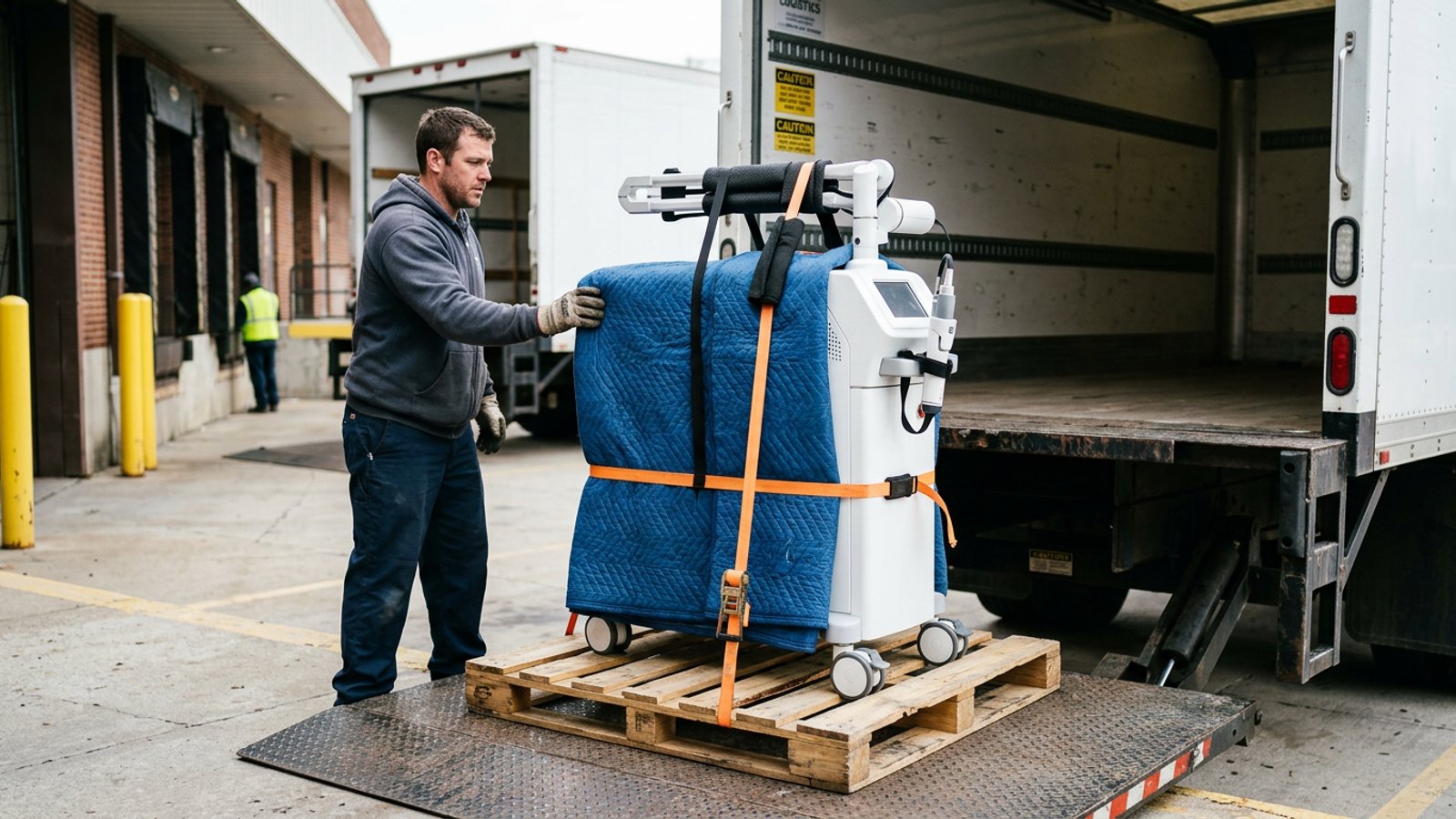
Shipping a CT Scanner Safely, From De-Installation to Calibration
A step-by-step guide to transporting CT scanners and diagnostic imaging equipment, from de-installation and crating to air-ride transport and calibration on arrival.
Why CT scanner transportation demands a specialist
A CT scanner is one of the most valuable and delicate assets a healthcare facility owns. These systems combine precision optics, a heavy gantry, and sensitive electronics that will not tolerate rough handling, vibration, or temperature swings. Shipping one is not a job for a general LTL carrier.
Specialized medical freight providers plan every stage of the move around protecting calibration and preventing damage, because a single jolt can knock a scanner out of alignment and trigger costly recalibration or repair.
Step 1: Coordinate de-installation and inventory
Before anything moves, the scanner must be professionally powered down and de-installed by qualified engineers. Our logistics coordinators sync schedules with your service team so the equipment is ready when our crew arrives.
We document a full inventory with serial numbers and photos, so what leaves your dock is exactly what arrives at the destination.
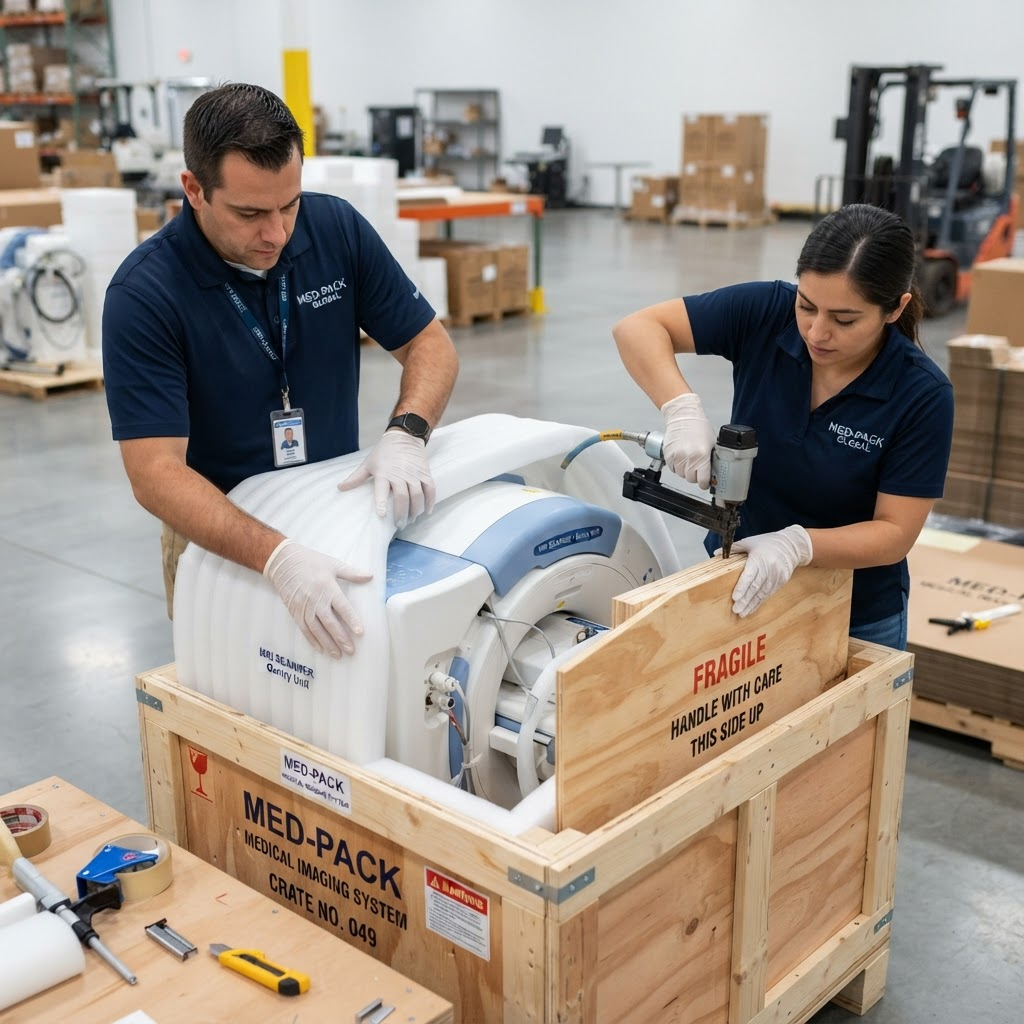
Step 2: Custom crating and shock protection
Each component is packed with foam-in-place inserts, anti-static materials, and custom wood crates engineered to the equipment dimensions. Shock and tilt indicators are added so any mishandling is visible on arrival.
Proper crating is the single biggest factor in damage-free delivery of diagnostic imaging equipment.
Step 3: Air-ride, climate-controlled transport
CT scanners travel on air-ride suspension trailers that dramatically reduce road vibration, with climate control to keep sensitive electronics within spec. Real-time tracking gives your team visibility from pickup to delivery.
For urgent replacements, expedited and emergency service keeps imaging downtime to a minimum.
Step 4: White glove delivery and reassembly
On arrival we protect floors and doorways, navigate stairs and tight corridors with specialized equipment, and place the scanner exactly where your engineers need it for reinstallation and calibration.
The result is a seamless handoff that gets your imaging suite back online quickly and safely.
See more jobs and tips on our Facebook page (opens in a new tab)
Need to ship this kind of equipment?
Our specialists build custom logistics plans for sensitive medical devices. Get a quote or call our 24/7 dispatch line.