White Glove Delivery or Standard Freight: Which Fits Your Medical Equipment?
Understand the difference between white glove medical equipment delivery and standard freight, and learn when inside delivery, uncrating, and reassembly are worth it.

What standard freight actually covers
Standard LTL and truckload freight delivers your shipment to the dock, and that is where the carrier responsibility usually ends. For pallets and rugged goods, that is fine.
For medical equipment, dock-to-dock leaves the hardest and riskiest part, moving a fragile device into the patient environment, entirely on your staff.
What white glove service adds
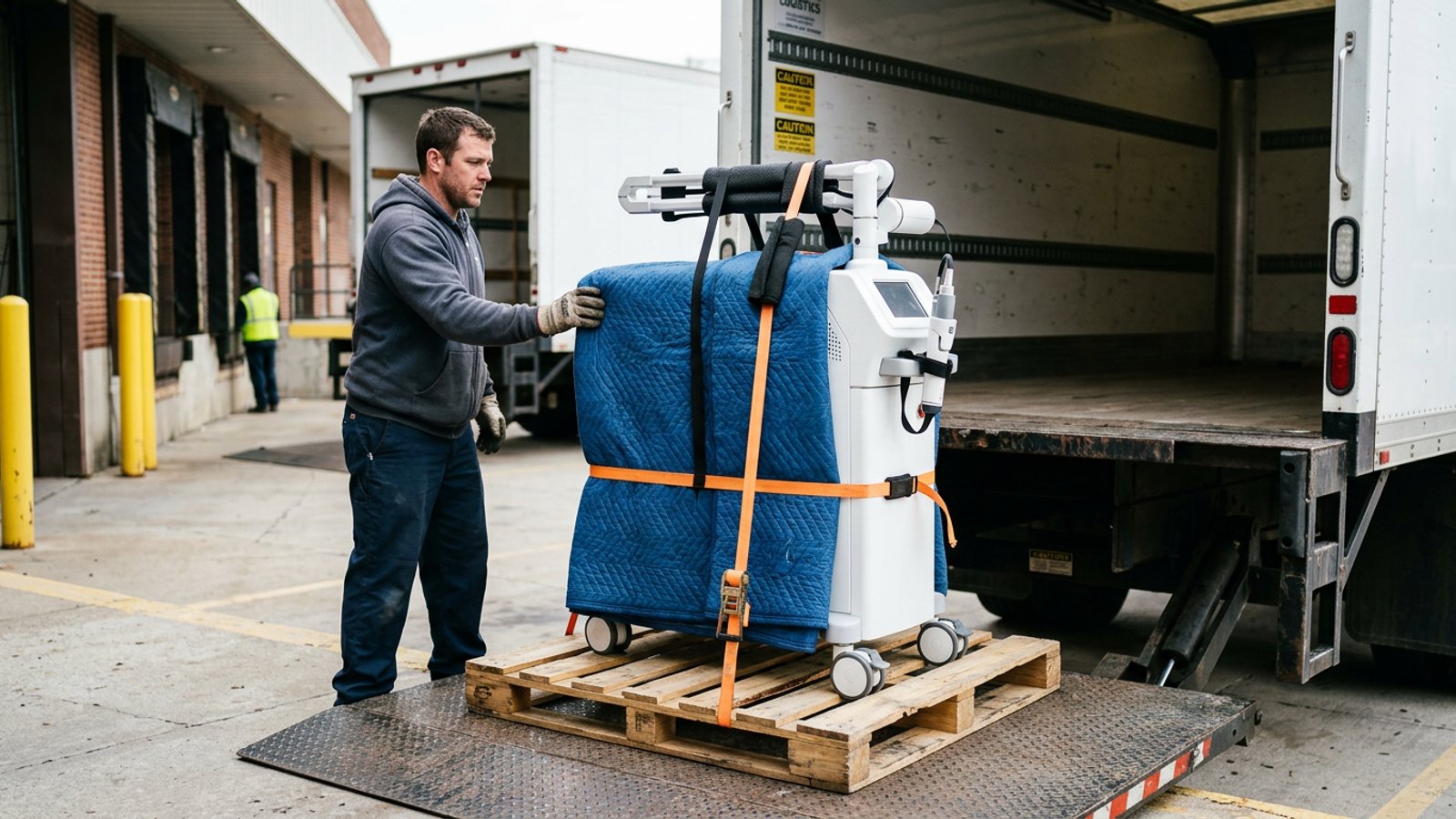
White glove medical shipping includes inside delivery, uncrating, placement, debris removal, and often disassembly and reassembly. Crews protect floors and doorways and use liftgates and stair crawlers to move heavy equipment safely.
This level of care protects both the equipment and your facility, and frees clinical staff from logistics work they are not equipped to handle.
When to choose white glove
Choose white glove for high-value, fragile, or heavy items: imaging systems, surgical equipment, hospital beds, and lab instruments. Choose it any time inside placement, reassembly, or setup is required.
When patient care depends on equipment being installed correctly and on time, white glove is not a luxury, it is risk management.
See more jobs and tips on our Facebook page (opens in a new tab)
Need to ship this kind of equipment?
Our specialists build custom logistics plans for sensitive medical devices. Get a quote or call our 24/7 dispatch line.